When exploring the historical landscape of Central Asia, the focus often naturally falls on the magnificent Islamic architecture of the Silk Road’s golden age. However, the region’s history stretches much further back, encompassing empires that shaped the ancient world. One of the most significant, yet often overlooked, sites is Ancient Nisa, located just outside the modern capital of Ashgabat in Turkmenistan.
Ancient Nisa was a major center, and at times the royal seat, of the Parthian Empire. Rising to power in the 3rd century BCE, the Parthians were a formidable force that controlled vast territories stretching from the Mediterranean to the borders of India, famously serving as one of the greatest rivals to the Roman Empire.
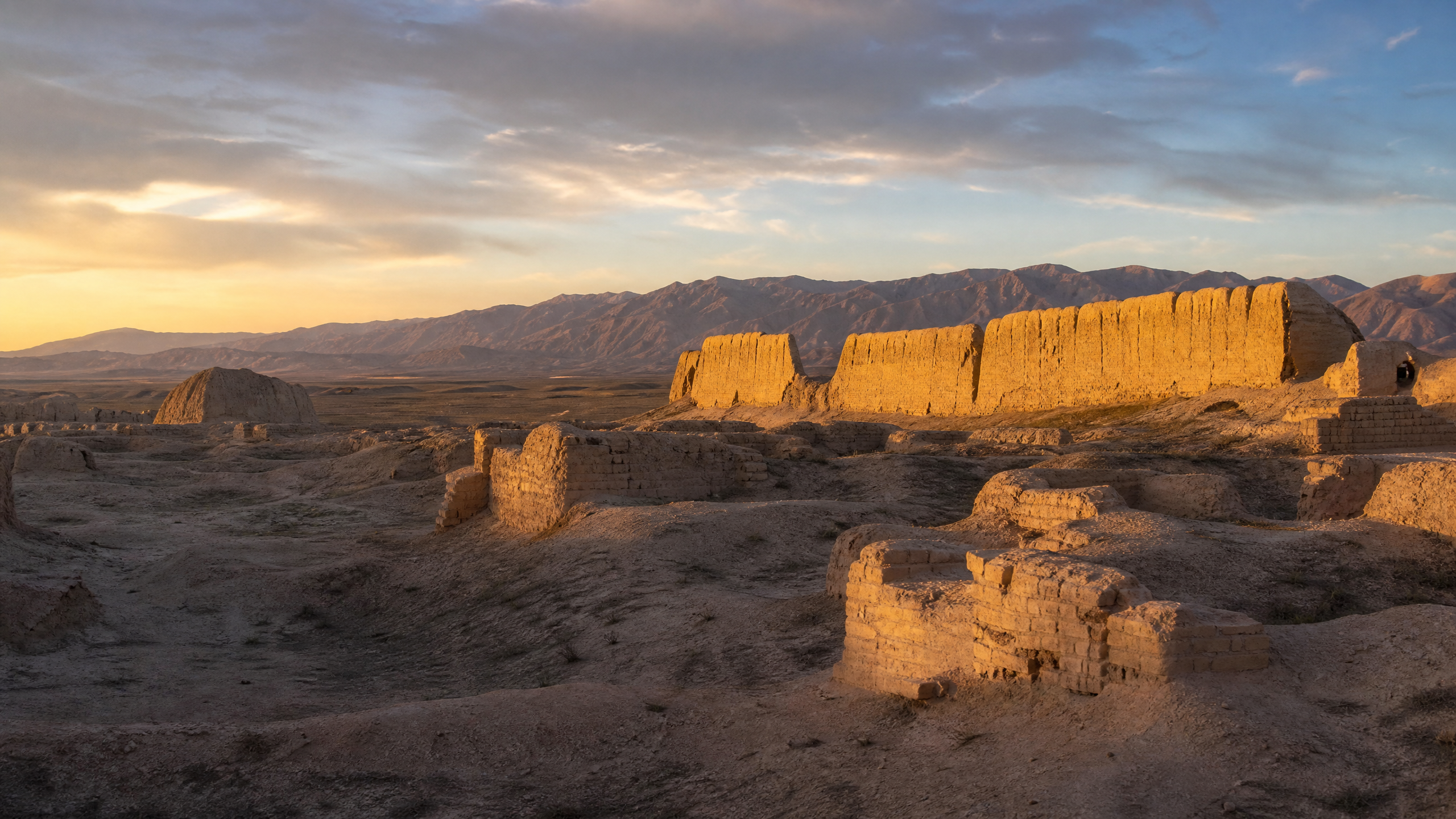
Today, the ruins of Nisa offer a fascinating window into this powerful ancient civilization. Set against the dramatic backdrop of the Kopet Dag mountains, the site consists of two main areas: Old Nisa and New Nisa. Old Nisa, the royal fortress, is particularly captivating. Excavations here have revealed the foundations of monumental structures, including palaces, temples, and ceremonial halls, demonstrating a sophisticated architectural style that blended Hellenistic and local traditions.
Among the most remarkable discoveries at Nisa are the exquisite ivory rhytons — horn-shaped drinking vessels — intricately carved with mythological scenes. These artifacts, along with marble statues and silver coins, highlight the wealth and artistic refinement of the Parthian court.
Recognized as one of the key UNESCO World Heritage Sites in the Five Stans, Ancient Nisa stands as a crucial testament to the cultural diversity of Central Asia. It reminds us that long before the medieval caravans crossed the deserts, the region was a dynamic crossroads of ancient empires, whose legacies continue to echo through history. Visiting Nisa is an essential experience for anyone seeking to understand the deep, multi-layered past of this fascinating part of the world.