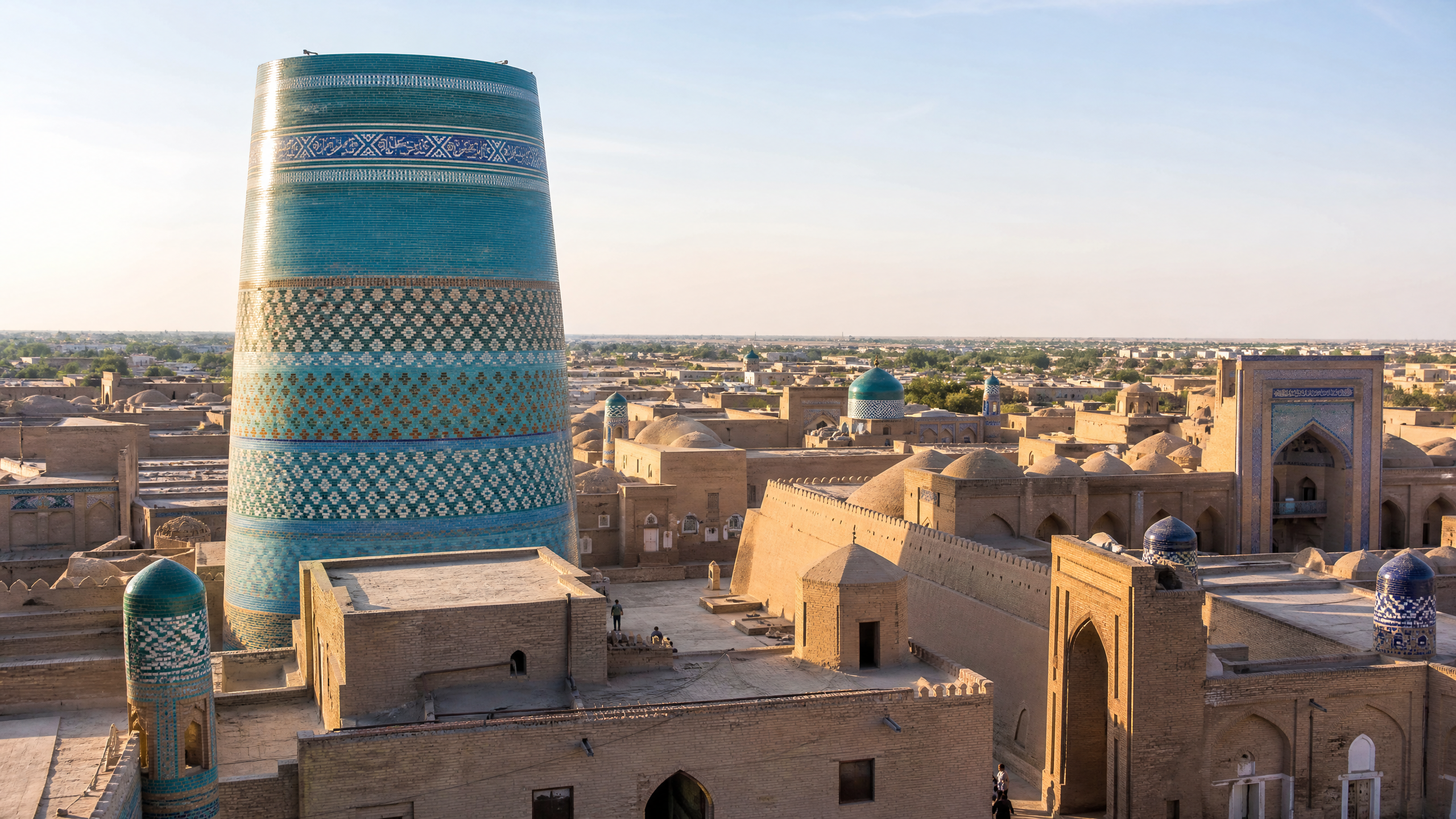
In the heart of the Khorezm region of Uzbekistan, surrounded by the harsh expanse of the Karakum Desert, lies a city that seems to have defied the passage of time. Ichan Kala, the walled inner fortress of Khiva, is a place where the modern world fades away, leaving visitors immersed in the atmosphere of an ancient Silk Road oasis.
Enclosed by massive, undulating mud-brick walls that glow with a golden hue in the late afternoon sun, Ichan Kala is a masterpiece of preservation. It was the first site in Uzbekistan to be recognized for its universal value, and walking through its gates is akin to stepping directly into the 19th century, or perhaps even earlier.
The architecture within the fortress is a stunning display of Islamic artistry. The skyline is dominated by the Kalta-Minor Minaret, an iconic, unfinished structure entirely covered in vibrant turquoise and blue tiles. Its stout, colorful presence is instantly recognizable and serves as a symbol of the city’s ambitious past.
Deeper within the walls, the Juma Mosque offers a profoundly serene experience. Unlike traditional open-courtyard mosques, its roof is supported by over 200 intricately carved wooden pillars, each unique and some dating back to the 10th century. The dim, cool interior provides a stark contrast to the bright desert sun outside.
Beyond the major monuments, the true charm of Ichan Kala lies in its labyrinthine alleys. Here, traditional courtyard houses, small artisan workshops, and quiet madrasas create a dense, atmospheric urban fabric.
As one of the most remarkable UNESCO World Heritage Sites in the Five Stans, Ichan Kala offers an unparalleled glimpse into the life of a Central Asian caravan town. It is not just a collection of old buildings, but a cohesive, living monument to the ingenuity and resilience of the people who thrived along the ancient trade routes.
Leave a Reply