From the local haunts of Butler, PA, to global adventures across continents, this is where Sara shares her journey. Get a glimpse of her favorite hiking trails, local pubs, and the experiences that shape her perspective, whether she’s a few miles from home or on the other side of the world.
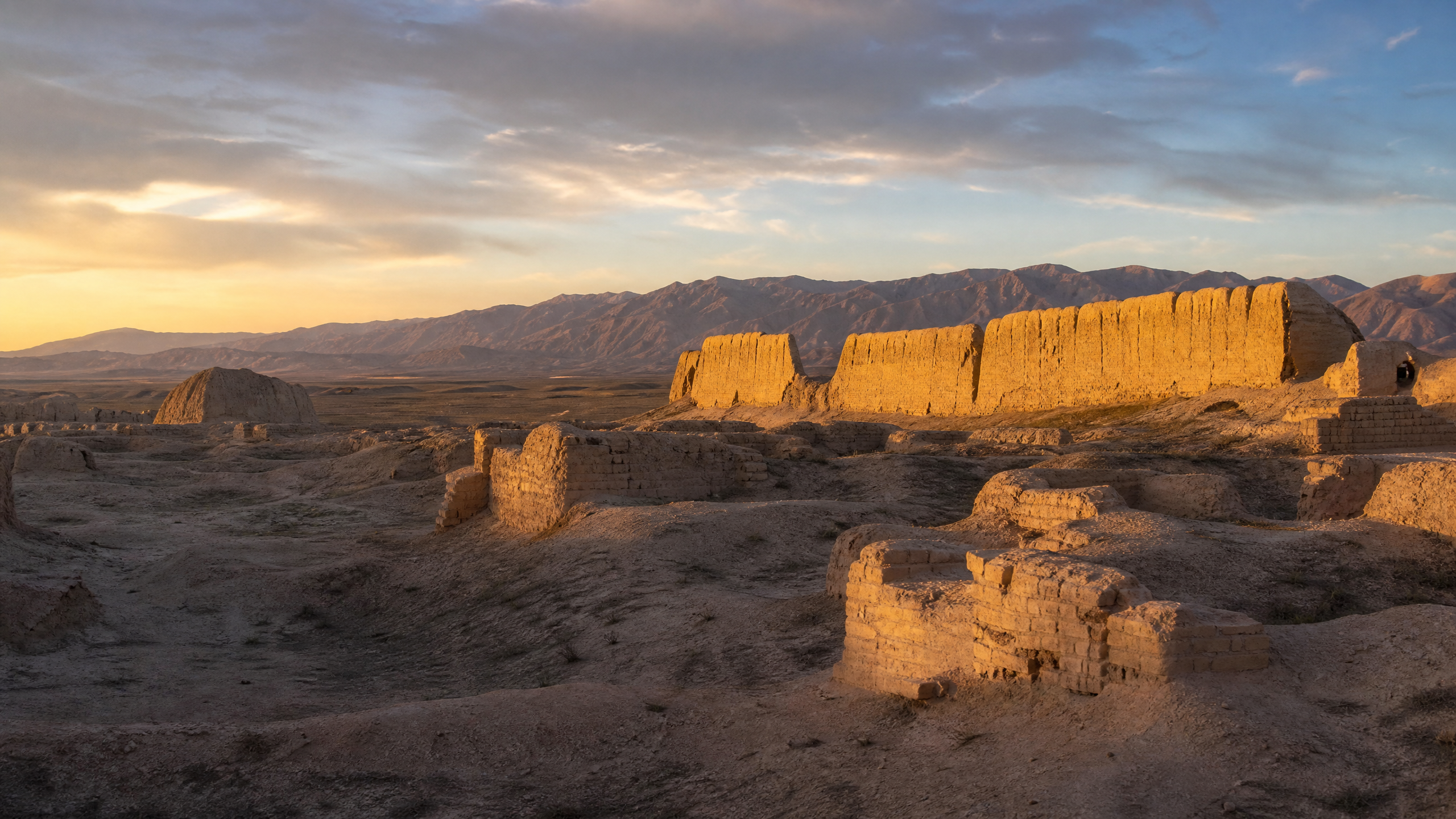
When exploring the historical landscape of Central Asia, the focus often naturally falls on the magnificent Islamic architecture of the Silk Road’s golden age. However, the region’s history stretches much further back, encompassing empires that shaped the ancient world. One of the most significant, yet often overlooked, sites is Ancient Nisa, located just outside the modern capital of Ashgabat in Turkmenistan.
Ancient Nisa was a major center, and at times the royal seat, of the Parthian Empire. Rising to power in the 3rd century BCE, the Parthians were a formidable force that controlled vast territories stretching from the Mediterranean to the borders of India, famously serving as one of the greatest rivals to the Roman Empire.
Today, the ruins of Nisa offer a fascinating window into this powerful ancient civilization. Set against the dramatic backdrop of the Kopet Dag mountains, the site consists of two main areas: Old Nisa and New Nisa. Old Nisa, the royal fortress, is particularly captivating. Excavations here have revealed the foundations of monumental structures, including palaces, temples, and ceremonial halls, demonstrating a sophisticated architectural style that blended Hellenistic and local traditions.
Among the most remarkable discoveries at Nisa are the exquisite ivory rhytons — horn-shaped drinking vessels — intricately carved with mythological scenes. These artifacts, along with marble statues and silver coins, highlight the wealth and artistic refinement of the Parthian court.
Recognized as one of the key UNESCO World Heritage Sites in the Five Stans, Ancient Nisa stands as a crucial testament to the cultural diversity of Central Asia. It reminds us that long before the medieval caravans crossed the deserts, the region was a dynamic crossroads of ancient empires, whose legacies continue to echo through history. Visiting Nisa is an essential experience for anyone seeking to understand the deep, multi-layered past of this fascinating part of the world.
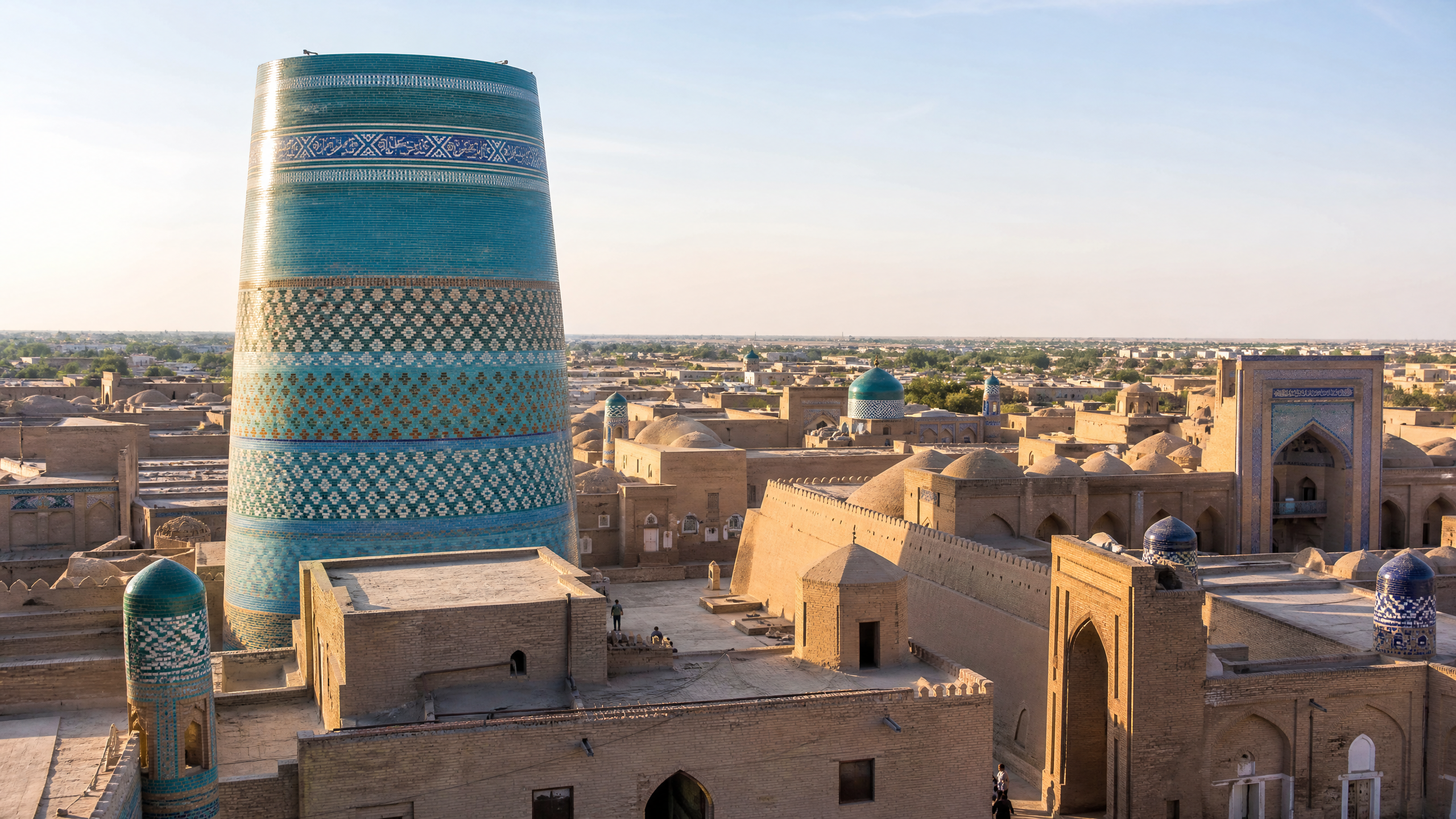
In the heart of the Khorezm region of Uzbekistan, surrounded by the harsh expanse of the Karakum Desert, lies a city that seems to have defied the passage of time. Ichan Kala, the walled inner fortress of Khiva, is a place where the modern world fades away, leaving visitors immersed in the atmosphere of an ancient Silk Road oasis.
Enclosed by massive, undulating mud-brick walls that glow with a golden hue in the late afternoon sun, Ichan Kala is a masterpiece of preservation. It was the first site in Uzbekistan to be recognized for its universal value, and walking through its gates is akin to stepping directly into the 19th century, or perhaps even earlier.
The architecture within the fortress is a stunning display of Islamic artistry. The skyline is dominated by the Kalta-Minor Minaret, an iconic, unfinished structure entirely covered in vibrant turquoise and blue tiles. Its stout, colorful presence is instantly recognizable and serves as a symbol of the city’s ambitious past.
Deeper within the walls, the Juma Mosque offers a profoundly serene experience. Unlike traditional open-courtyard mosques, its roof is supported by over 200 intricately carved wooden pillars, each unique and some dating back to the 10th century. The dim, cool interior provides a stark contrast to the bright desert sun outside.
Beyond the major monuments, the true charm of Ichan Kala lies in its labyrinthine alleys. Here, traditional courtyard houses, small artisan workshops, and quiet madrasas create a dense, atmospheric urban fabric.
As one of the most remarkable UNESCO World Heritage Sites in the Five Stans, Ichan Kala offers an unparalleled glimpse into the life of a Central Asian caravan town. It is not just a collection of old buildings, but a cohesive, living monument to the ingenuity and resilience of the people who thrived along the ancient trade routes.
A journey along the ancient Silk Road is a voyage through the annals of human history. The routes that once connected the East and West are dotted with monumental cities and architectural wonders that tell the stories of empires, traders, and scholars. For modern travelers, exploring these sites offers a tangible connection to a vibrant past. Here are three must-visit historic sites that capture the essence of the Silk Road.
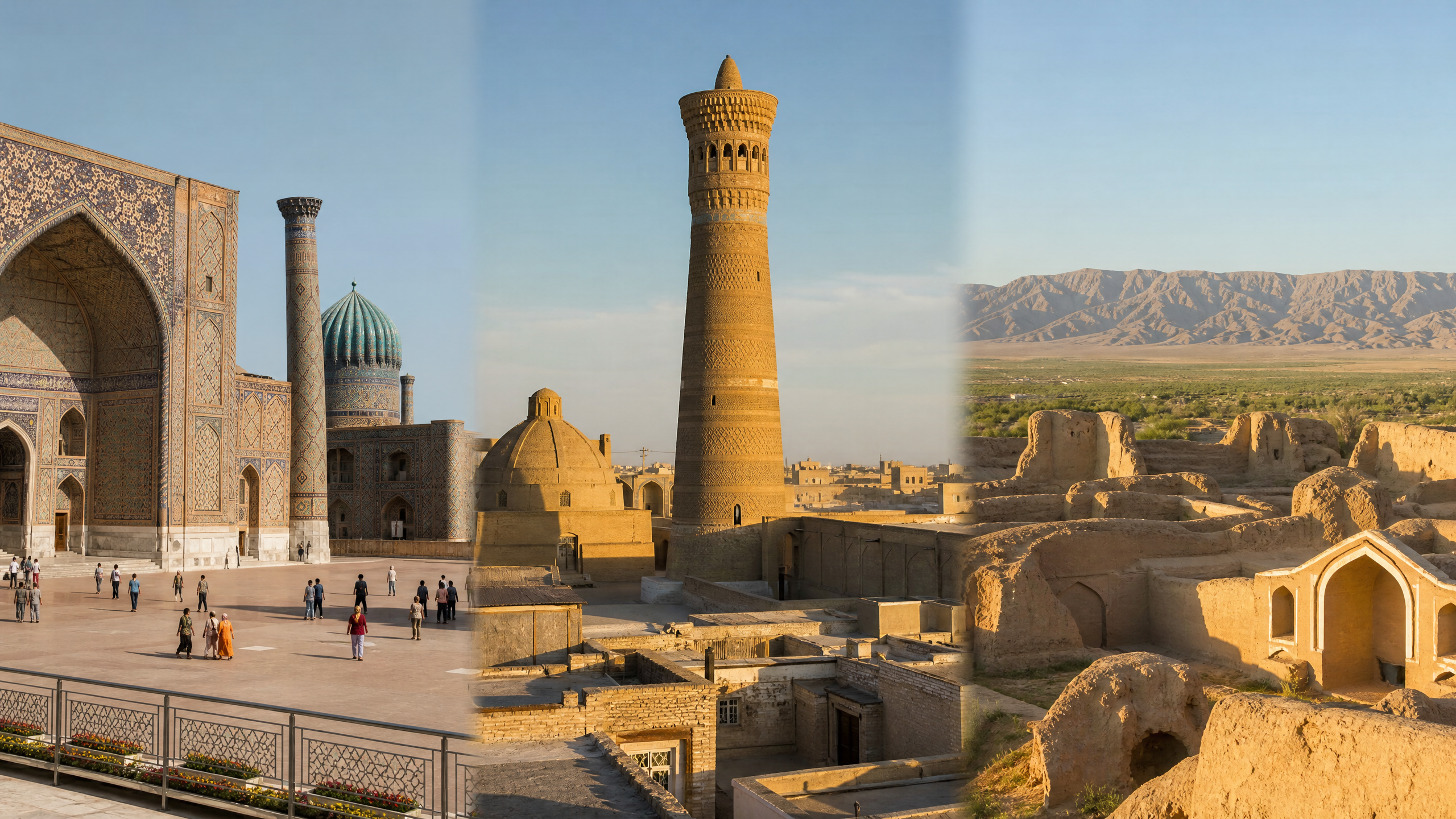
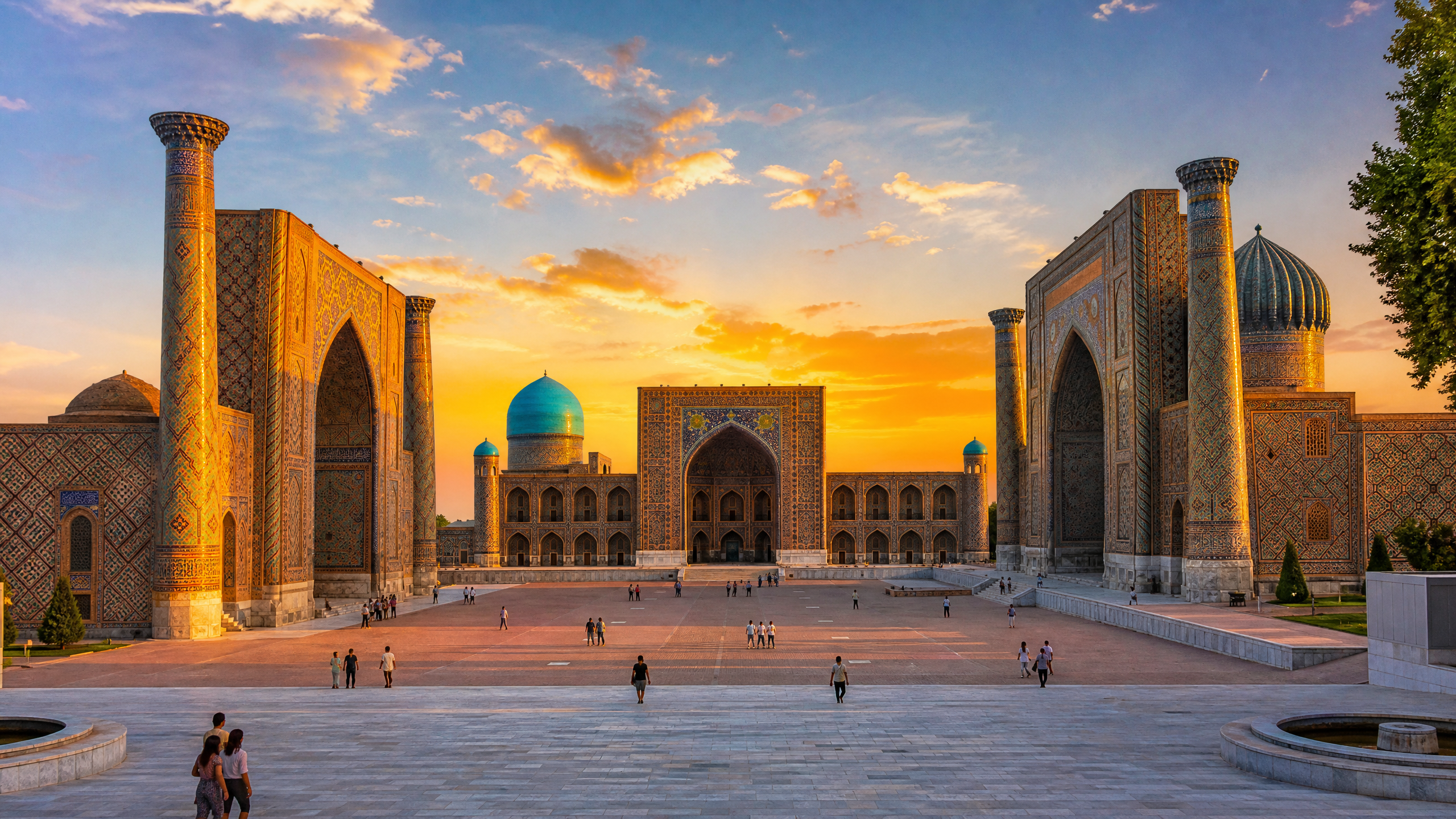
First is the legendary city of Samarkand in Uzbekistan. Often referred to as the “Crossroads of Cultures,” Samarkand was a pivotal hub of trade and intellectual exchange. The heart of the city is Registan Square, an awe-inspiring public space flanked by three magnificent madrasas adorned with intricate majolica tiles and towering azure domes. Nearby, the Gur-e-Amir Mausoleum, the final resting place of the conqueror Timur, stands as a masterpiece of Islamic architecture, its ribbed dome a defining symbol of the city.
Moving westward, the ancient city of Bukhara offers a different, yet equally compelling, experience. Unlike the monumental scale of Samarkand, Bukhara’s charm lies in its remarkably preserved old town. Wandering through its labyrinthine streets, visitors encounter ancient trading domes, serene courtyards, and the towering Kalyan Minaret, which has watched over the city for nearly a millennium. Bukhara feels like a living museum, where the atmosphere of the ancient caravan routes is still palpable.
Finally, just outside Ashgabat in Turkmenistan, lie the ruins of Ancient Nisa. Once the royal seat of the powerful Parthian Empire, this site provides a fascinating glimpse into a civilization that rivaled Rome. The excavated fortresses and ceremonial halls reveal a sophisticated culture, offering a stark contrast to the Islamic architecture found elsewhere in the region.
These remarkable locations are just a few examples of the UNESCO World Heritage Sites in the Five Stans. Each site preserves a unique chapter of the Silk Road’s legacy, inviting travelers to step back in time and uncover the profound history that shaped Central Asia and the world.
The Silk Road is often remembered primarily as a vast network of ancient trade routes that facilitated the exchange of goods between the East and the West. However, its true legacy extends far beyond commerce. The Silk Road was a dynamic conduit for the profound exchange of ideas, religions, and artistic traditions, fundamentally shaping the cultures of the regions it traversed.
As merchants traveled across the deserts and mountains of Central Asia, they carried with them more than just silk, spices, and precious metals. They brought their beliefs, philosophies, and artistic techniques. This constant interaction led to a remarkable blending of cultures, visible today in the art and architecture of cities along the route.
In places like Samarkand and Bukhara, the influence of this exchange is breathtakingly evident. The intricate tilework, towering minarets, and majestic domes reflect a synthesis of Persian, Islamic, and local Central Asian artistic traditions. The use of vibrant lapis lazuli blue, gold leaf, and complex geometric patterns became hallmarks of a shared aesthetic that evolved over centuries of cross-cultural contact.
Furthermore, the Silk Road was instrumental in the spread of major world religions. Buddhism, Islam, and Christianity all found pathways along these routes, leaving behind a legacy of monasteries, mosques, and churches that enriched the spiritual landscape of Central Asia.
This historical phenomenon is a classic example of Silk Road cultural exchange. It was a thriving marketplace of human creativity, where a ceramic technique developed in one empire could inspire artisans thousands of miles away.
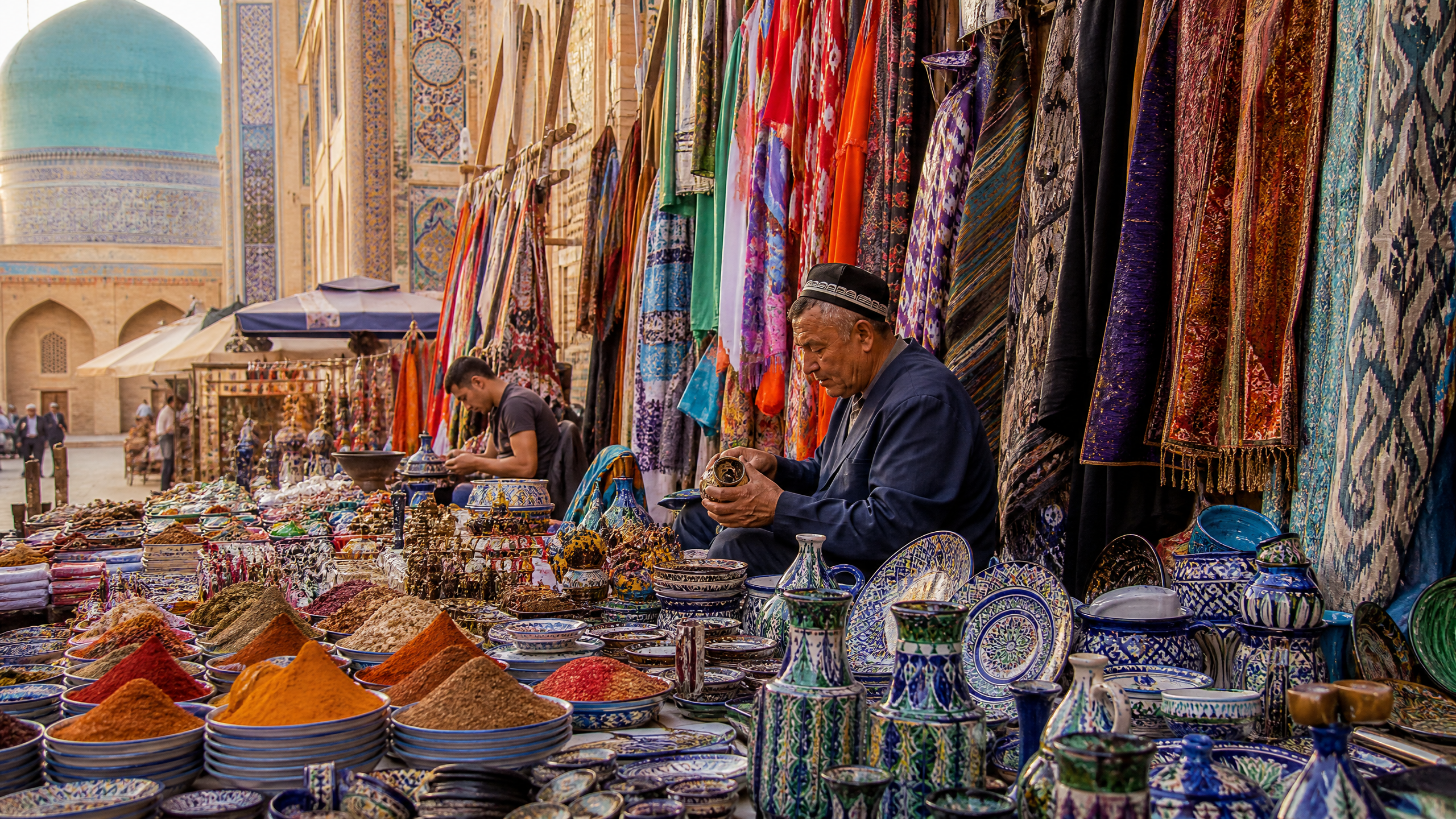
Today, travelers to Central Asia can still witness the enduring impact of this exchange. From the vibrant textiles and intricate wood carvings found in local bazaars to the monumental architecture that defines the skyline of ancient cities, the art and culture of the region remain a testament to the enduring power of human connection across vast distances. The Silk Road did not just move goods; it wove the cultural fabric of the world.
When we think of Central Asia, images of ancient Silk Road cities, towering minarets, and bustling bazaars often come to mind. However, beyond the architectural marvels of its urban centers lies a vast and diverse landscape that is a paradise for outdoor enthusiasts. For those who seek adventure in nature, Central Asia truly has it all.
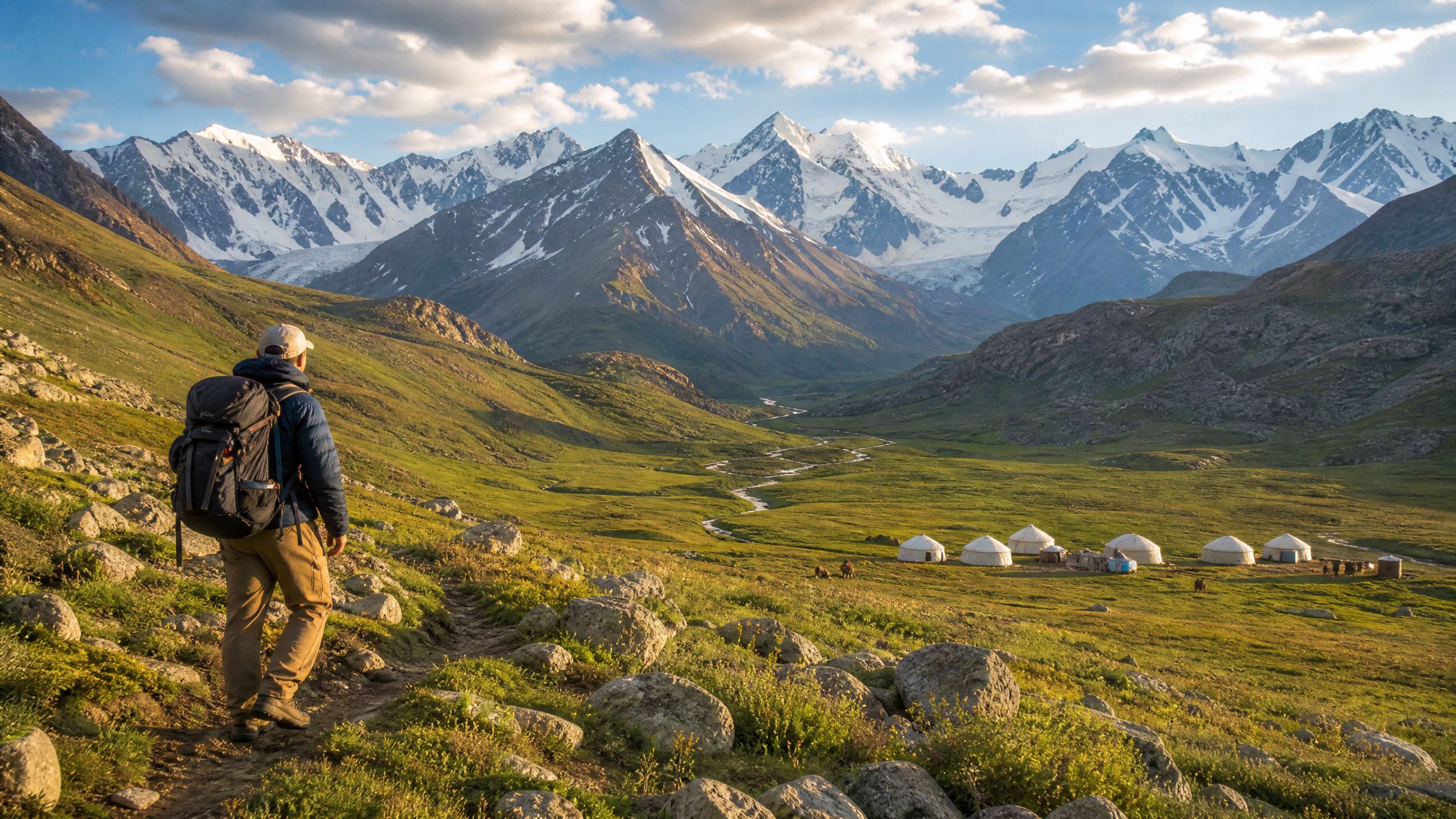
The region’s geography is incredibly varied, offering everything from soaring mountain peaks to expansive deserts and pristine alpine lakes. In countries like Kyrgyzstan and Tajikistan, the Tian Shan and Pamir mountain ranges provide some of the most dramatic and unspoiled trekking routes in the world. Here, hikers can traverse high-altitude passes, encounter nomadic communities living in traditional yurts, and witness breathtaking vistas that rival the Himalayas.
For those who prefer a different kind of wilderness, the deserts of Uzbekistan and Turkmenistan offer unique experiences. The Kyzylkum and Karakum deserts are vast, silent expanses where travelers can ride camels across rolling dunes or spend the night under a canopy of stars at a desert camp. The stark beauty of these arid landscapes provides a striking contrast to the lush valleys found elsewhere in the region.
Central Asia is also home to remarkable bodies of water. Lake Issyk-Kul in Kyrgyzstan, one of the largest alpine lakes globally, is surrounded by snow-capped peaks and offers opportunities for swimming, kayaking, and horseback riding along its shores.
The natural beauty of the region is deeply intertwined with its history. The same mountain passes and desert trails that modern adventurers explore were once vital arteries of the Silk Road cultural exchange. Traveling through these landscapes is not just an outdoor adventure; it is a journey through the corridors of history, where traders, explorers, and empires once journeyed.
Whether you are an avid trekker, a nature photographer, or simply someone who loves the great outdoors, Central Asia offers a pristine and uncrowded alternative to more traditional adventure destinations. It is a region where the majesty of nature and the echoes of history combine to create unforgettable experiences.
The travel landscape is constantly evolving, and in 2026, one destination is standing out more than ever: Uzbekistan. Once considered a challenging region to navigate due to strict entry requirements, this Central Asian jewel has transformed into one of the most accessible and highly sought-after travel spots. The catalyst for this surge in popularity? The widespread implementation of visa-free travel.
For years, the bureaucratic hurdles of obtaining a visa deterred many potential visitors. However, the removal of this “paperwork wall” has revolutionized the travel experience. For citizens of numerous countries, including the United States, entering Uzbekistan now requires nothing more than a valid passport and a sense of adventure. This streamlined process has made the country an incredibly appealing option for those seeking authentic, off-the-beaten-path destinations without the logistical headaches.
The appeal of visa-free travel goes beyond mere convenience; it represents a welcoming embrace from a nation eager to share its rich heritage with the world. Travelers can now spontaneously decide to explore the ancient Silk Road cities of Samarkand, Bukhara, and Khiva, marveling at the turquoise domes and intricate mosaics that have stood for centuries.
This accessibility is a major factor in why Uzbekistan is frequently highlighted in discussions about current Uzbekistan travel trends. The country perfectly balances the exotic allure of Central Asia with modern comforts, making it an ideal destination for both seasoned explorers and first-time visitors to the region.
Furthermore, the ease of entry is complemented by excellent domestic infrastructure. The Afrosiyob high-speed rail network connects major cities efficiently, allowing travelers to maximize their time experiencing the culture rather than navigating complex transit systems.
In 2026, the combination of profound historical significance, unparalleled hospitality, and the simplicity of visa-free entry makes Uzbekistan a top choice for international travelers. It is a destination that promises a deeply rewarding experience, now more accessible than ever before.
When planning a journey to the heart of the Silk Road, one of the most common questions travelers ask is how much time is truly needed to experience the magic of Uzbekistan. While the country offers a depth of history and culture that could take months to fully explore, a 10-day itinerary is often considered the perfect length for a comprehensive and deeply rewarding introduction.
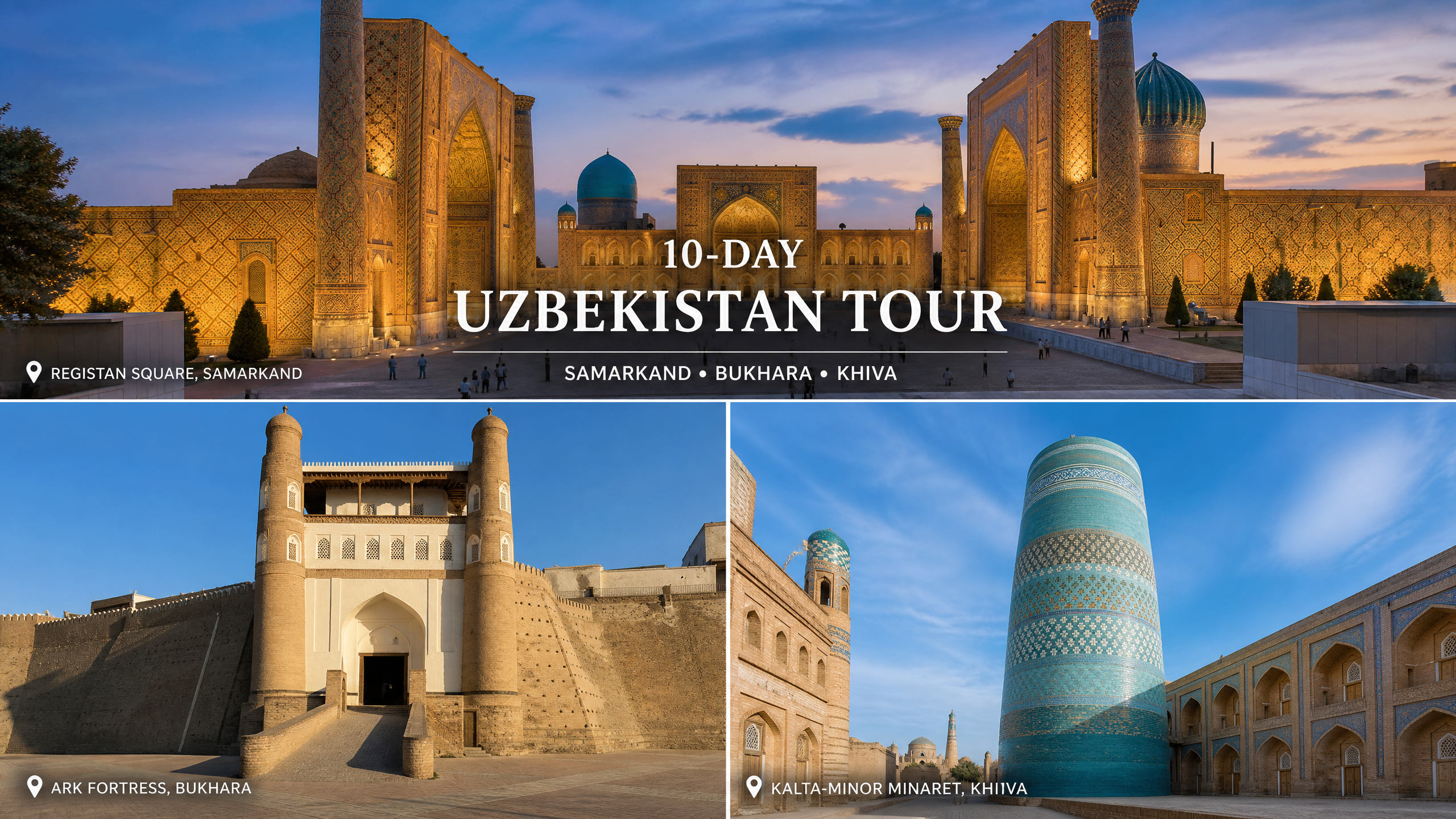
A 10-day tour provides an exquisite taste of Uzbekistan’s most iconic treasures without feeling rushed. This timeframe allows travelers to comfortably cover the classic “Golden Triangle” of Silk Road cities: Samarkand, Bukhara, and Khiva, while also spending time in the vibrant capital, Tashkent.
The journey typically begins in Tashkent, where the contrast between modern avenues and the historic Chorsu Bazaar offers a fascinating introduction to the country. From there, the efficient Afrosiyob high-speed train whisks travelers to Samarkand, a city synonymous with Silk Road grandeur. Here, a 10-day schedule allows ample time to marvel at Registan Square and the deeply moving Gur-e-Amir Mausoleum, the resting place of Amir Timur.
Moving on to Bukhara, travelers can wander through a city that feels frozen in time. With its ancient trading domes and tranquil courtyards, Bukhara rewards those who take the time to soak in its atmosphere. Finally, the journey concludes in Khiva, where the walled inner city of Ichan Kala serves as a living museum of Islamic architecture.
To make the most of this timeframe, carefully crafting the best Uzbekistan itinerary is essential. It ensures that you not only see the major monuments but also have the opportunity to engage with the local culture, whether through a traditional plov cooking class or a visit to an artisan’s workshop.
In essence, 10 days in Uzbekistan strikes the perfect balance. It is long enough to immerse yourself in the rich history and vibrant culture of the region, yet concise enough to fit into a standard vacation window. For first-time visitors, it is an excellent way to discover why this Central Asian gem is capturing the hearts of travelers worldwide.
For decades, the countries of Central Asia were seen as destinations only for the most intrepid explorers. However, in recent years, the secret has gotten out, and Uzbekistan is quickly becoming a dream vacation spot for travelers worldwide. The allure of this vibrant country lies in its perfect blend of profound history, stunning architecture, and modern accessibility.
One of the primary reasons travelers are drawn to Uzbekistan is its deep connection to the ancient Silk Road. Cities like Samarkand, Bukhara, and Khiva offer a glimpse into a world where merchants, scholars, and empires crossed paths. The monumental Registan Square in Samarkand, with its three majestic madrasas, is a sight that defies photography and leaves visitors in awe. Walking through the perfectly preserved mud-brick walls of Khiva’s Ichan Kala feels like stepping into a living museum, where artisans still practice techniques passed down through generations.
Beyond its historical significance, Uzbekistan has made significant strides in becoming more accessible to international visitors. With the introduction of visa-free entry for citizens of many countries, including the United States, the logistical hurdles of planning a trip have been greatly reduced. This newfound ease of travel has opened the doors for a broader range of tourists to experience the country’s wonders.
Furthermore, the modern infrastructure, such as the Afrosiyob high-speed train, makes navigating between major cities both efficient and comfortable. Travelers can now seamlessly journey from the bustling capital of Tashkent to the ancient heart of Samarkand in just over two hours, allowing more time to immerse themselves in the culture rather than worrying about transportation.
For those considering a trip, planning the best Uzbekistan itinerary is key to maximizing the experience. Whether you have 10 days for a focused exploration or 15 days for a deeper immersion, the country offers a wealth of experiences that cater to different travel styles.
Ultimately, a vacation to Uzbekistan is a journey into the heart of history, where ancient traditions meet modern hospitality. It is a destination that promises not just a trip, but a profound and unforgettable experience.
Moonlit Hot Tubs & Forest Mornings: Inside This Ohio Cabin Getaway.
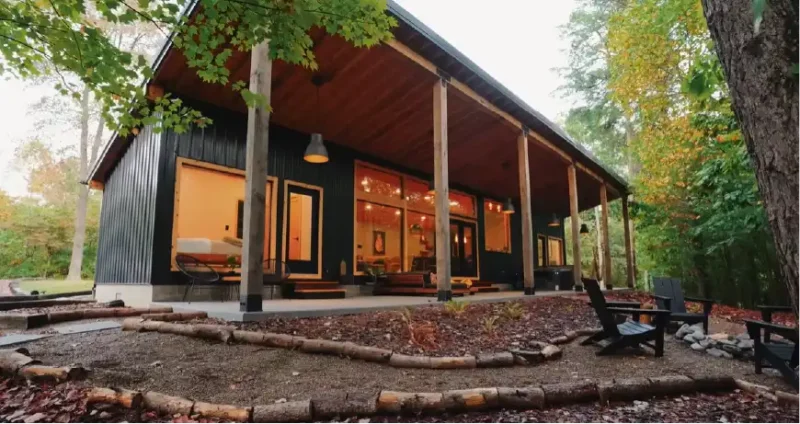
There are cabins you stay in, and then there are cabins you sink into—the kind that reset your breathing, soften your shoulders, and remind you how good it feels to be surrounded by trees. The Ren, tucked quietly into the woods of Hocking Hills, is one of those rare places where the outdoor experience becomes the heart of the trip.
This modern 850‑square‑foot cabin is beautiful inside, of course, but what really stayed with me were the moments spent outdoors: coffee on the porch, birdsong drifting through the trees, a hot tub soak under a full moon, and the kind of deep quiet you only find at the end of a forest road.
A Porch Made for Slow Living
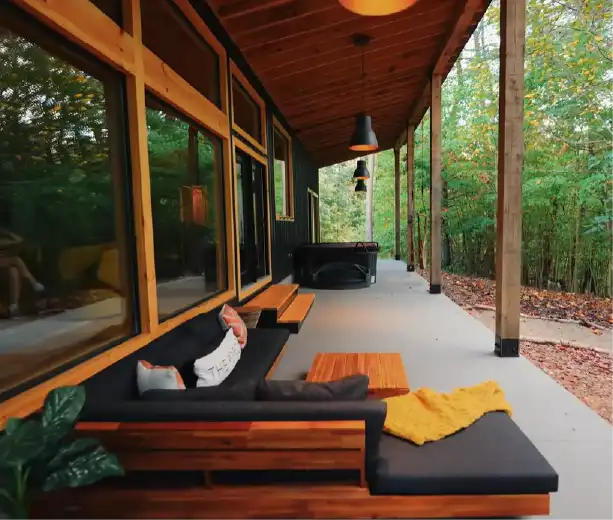
The Ren sits privately at the end of a wooded lane, and the moment you step onto the covered porch, you understand why people come here to unwind. The porch stretches across the front of the cabin, offering a cozy lounge area that quickly became my favorite spot.
Most mornings started the same way: wrapped in a blanket, coffee in hand, book open on my lap. The forest wakes up gently here—soft rustling, distant woodpeckers, the occasional squirrel making its grand entrance. I’d read until the sun warmed the porch just enough to make me forget the chill, and only then would hunger finally nudge me inside to make brunch.
It’s the kind of porch that encourages lingering.
A Hot Tub Under the Full Moon
If the porch is perfect for mornings, the hot tub is pure magic at night. Set just off the patio, it feels tucked into its own little corner of the woods. On clear nights, the sky opens up above you, and if you’re lucky enough to catch a full moon like I did, the entire forest glows.
If you like my blog, consider subscribing. Thanks!
There’s something grounding about soaking in warm water while the cool night air brushes your shoulders. The trees sway, the stars shimmer, and the world feels wonderfully quiet. It’s the kind of moment you want to bottle up and take home.
Fire Pit Nights & Easy Conversation
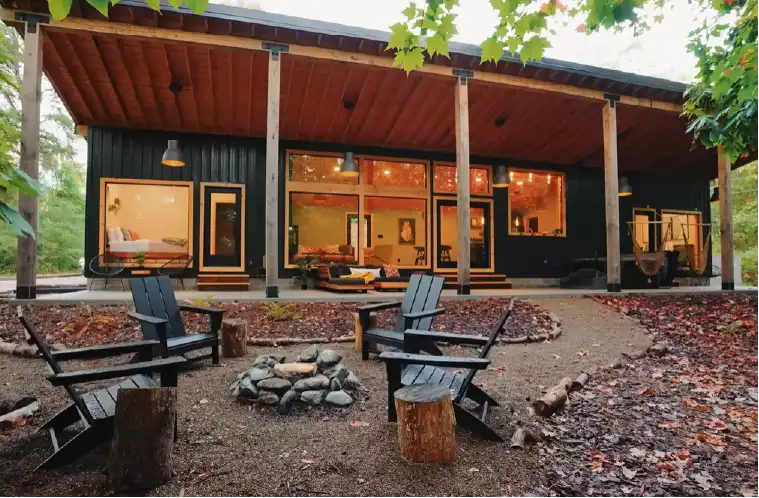
After a long soak, the fire pit becomes the natural next stop. It’s positioned just far enough from the cabin to feel like its own gathering space, but close enough to wander back inside when the night gets chilly.
I loved ending the evening here—wrapped in a sweater, sipping a nightcap, letting the warmth of the fire chase away the last bit of cold. The crackling logs, the scent of woodsmoke, the glow of embers… it all adds up to a perfect outdoor ritual.
Whether you’re sharing stories with friends or simply enjoying the quiet, the fire pit makes the night feel complete…almost as good as my last cabin getaway (but better in many ways).
Inside The Ren: Modern Comfort Between Outdoor Adventures
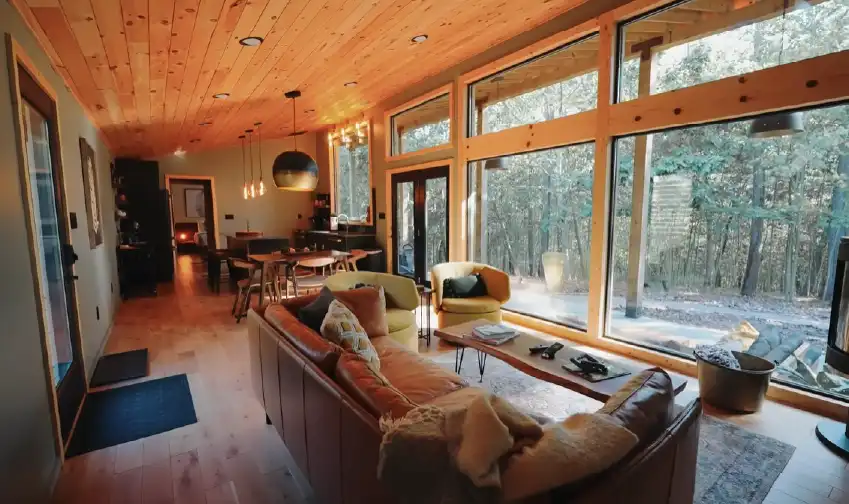
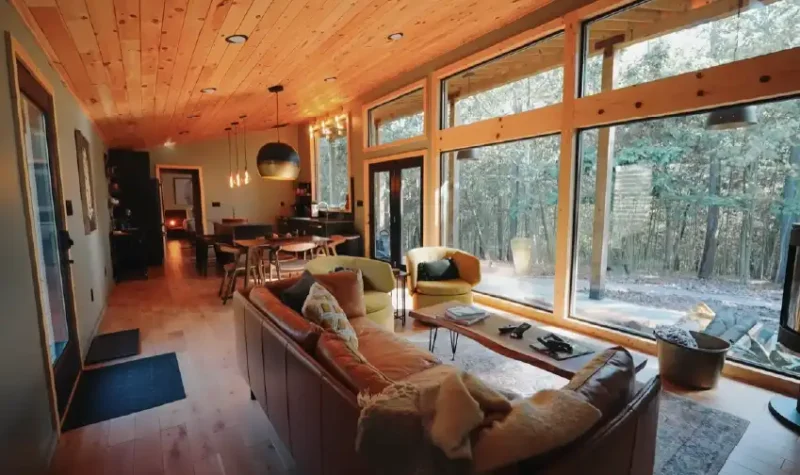
Even with all the outdoor charm, the inside of The Ren is just as thoughtfully designed. The open‑concept living room centers around a cozy fireplace, and the kitchen—with its black Café appliances and forest‑view window—makes cooking feel like part of the experience.
Two bedrooms sit on opposite sides of the cabin, each with patio access and its own bathroom. One bedroom is slightly larger, while the other wins in bathroom design with its gold accents and cool tile flooring. It’s a perfect balance for couples or small groups who appreciate a little privacy.
Exploring the Trails & Natural Wonders of Hocking Hills
When you’re ready to venture beyond the porch, Hocking Hills offers some of the most beautiful trails in Ohio. From dramatic rock formations to peaceful forest paths, the region is full of places to wander:
Old Man’s Cave
Devil’s Pool
Scenic hiking trails with waterfalls and stone bridges
Towering cliffs and shaded ravines
It’s a dream for anyone who loves being outdoors.
Why The Ren Belongs on Your Cabin Getaway List
If you’re craving a retreat where the outdoor experience is just as memorable as the cabin itself, The Ren delivers. From moonlit hot tub nights to slow porch mornings, it’s a place that invites you to breathe deeper, move slower, and reconnect with the simple joys of being outside.
Whether you’re planning a romantic weekend, a nature‑focused escape, or a quiet solo retreat, this Hocking Hills cabin is the perfect backdrop.
When my friend suggested we check out a dueling piano show during our weekend trip to Columbus, Ohio, I’ll admit I wasn’t entirely sure what to expect. I’d heard the term before, but the reality of experiencing one firsthand turned out to be far more entertaining—and interactive—than I could have imagined.
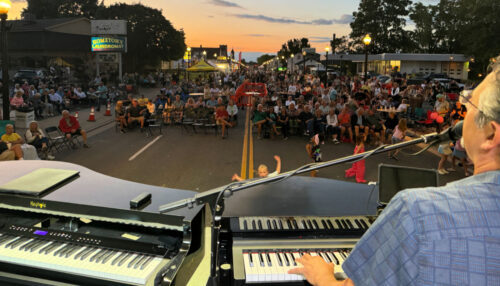
Credit: Piano Maniacs, Outdoor civic event in Ohio
A Recommendation Turned Memorable
What started as a casual suggestion for Saturday night entertainment became one of the most memorable experiences of our Ohio adventure. If you’re planning a trip to the Buckeye State and looking for something beyond the typical dinner-and-a-movie routine, let me tell you why dueling piano shows should be at the top of your entertainment list.
What Exactly Are Dueling Piano Shows?
Picture this: two grand pianos facing each other, two incredibly talented musicians, and an audience that becomes part of the show.
That’s the magic of dueling piano entertainment. It’s not really about the pianists competing against each other—it’s about them working together to create an interactive musical experience that’s different every single night.
The concept is beautifully simple yet endlessly entertaining. The pianists take song requests from the audience, often playing everything from classic rock anthems to current pop hits, Broadway show tunes to country favorites. But here’s where it gets interesting: they don’t just play the songs. They encourage—no, they demand—audience participation.
During our night at Howl at the Moon in Columbus, I watched in amazement as the entire room transformed from a collection of strangers into a unified chorus of singers, clappers, and dancers. It’s impossible to remain a passive observer at these shows.
The Ohio Dueling Piano Scene
Ohio has embraced the dueling piano concept with enthusiasm, and for good reason. The state’s friendly, outgoing culture seems perfectly suited to this type of interactive entertainment. During our research for the trip, we discovered several venues across Ohio that host regular dueling piano shows. Plus, dueling pianos for hire. Groups such as Cleveland Keys, Felix, and Piano Maniacs.
Columbus, in particular, has become something of a hub for this entertainment style. The city’s vibrant nightlife scene and college town energy create the perfect atmosphere for the high-energy, participatory nature of dueling piano shows. But it’s not just Columbus—cities like Cleveland, Cincinnati, and Dayton also host these entertaining events.
What struck me most about the Ohio venues was how they’ve made dueling piano shows accessible to different crowds. Some venues cater to the college crowd with late-night shows and current hits, while others offer earlier shows that appeal to families and older audiences with classic rock and nostalgic favorites.
The Audience Participation Experience
Here’s what no one prepared me for: you will participate, whether you plan to or not. The pianists are masters at reading the room and drawing even the most reluctant audience members into the experience.
It started innocently enough. The pianists asked for song requests, and people began shouting out titles. But then came the real fun. When someone requested “Sweet Caroline,” the entire room erupted into the famous “BAH BAH BAH” chorus. When they played “Piano Man,” everyone became Billy Joel for four minutes.
But the participation goes beyond just singing along. The pianists encourage dancing, clapping, and even bring audience members on stage for special moments. I watched a shy woman celebrate her birthday by being serenaded on stage, and a group of friends commemorate a bachelor party with a hilarious rendition of “Friends in Low Places.”
The beauty of this format is that it creates instant connections between strangers. By the end of the night, our table was singing along with people we’d never met, sharing song requests, and laughing together at the pianists’ witty banter.
Song Requests and Musical Variety
One of the most impressive aspects of dueling piano shows is the musicians’ incredible repertoire. These aren’t just piano players—they’re musical encyclopedias who can seemingly play anything the audience throws at them.
During our night in Columbus, I heard everything from “Bohemian Rhapsody” to “Uptown Funk,” from “Don’t Stop Believin’” to “Old Town Road.” The pianists seamlessly transitioned between genres, decades, and styles, often mashing up songs in creative ways that had the audience cheering.
The request system adds an element of unpredictability that keeps the energy high. Audience members write their requests on napkins along with tips (yes, tipping for requests is part of the experience), and the pianists choose which songs to play based on crowd energy, tip amounts, and their own musical instincts.
What amazed me was how they handled requests for songs that might not traditionally work on piano. They found ways to make electronic dance music, heavy metal, and even rap songs work in their format, often with hilarious and surprisingly effective results.
The Atmosphere and Energy
The atmosphere at a dueling piano show is unlike anything else I’ve experienced. It’s part concert, part comedy show, part karaoke night, and part community sing-along. The energy is infectious and builds throughout the evening.
The pianists serve as both musicians and entertainers, keeping up a steady stream of banter, jokes, and crowd interaction between songs. They’re skilled at reading the room’s energy and adjusting their performance accordingly. When the crowd needs pumping up, they’ll launch into a high-energy rock anthem. When people want to sing along, they’ll choose a beloved classic that everyone knows.
The venues themselves contribute to the atmosphere. Most dueling piano bars are designed to feel intimate and inclusive, with the pianos positioned so everyone has a good view and can feel part of the action. The lighting, sound systems, and seating arrangements all work together to create an environment where participation feels natural and fun.
Tips for First-Time Visitors
If you’re planning to experience a dueling piano show in Ohio, here are some insights from my experience:
Come with an open mind and ready to participate. The more you put into the experience, the more you’ll get out of it. Don’t worry about your singing voice—everyone’s singing, and the energy of the room carries you along.
Bring cash for tips and requests. The tip-based request system is part of the fun, and it’s how you can influence the musical direction of the evening. Popular songs or special occasions often warrant larger tips.
Arrive early for better seating. While there’s really no bad seat at most dueling piano venues, being closer to the action enhances the experience. Plus, the pianists often interact more directly with front-row tables.
Be prepared for a late night. These shows typically run late, especially on weekends. The energy builds as the night progresses, so some of the best moments happen in the later hours.
Why Ohio Gets It Right
After experiencing dueling piano entertainment in Ohio, I understand why the state has embraced this format so enthusiastically. There’s something about the Midwest friendliness and openness that perfectly complements the interactive nature of these shows.
Ohioans seem naturally inclined to participate, sing along, and connect with strangers over shared musical experiences. The state’s strong musical heritage—from rock and roll’s roots in Cleveland to the diverse music scenes in its major cities—provides the perfect backdrop for this type of entertainment.
Planning Your Dueling Piano Adventure
If you’re planning a trip to Ohio and want to include a dueling piano show in your itinerary, I highly recommend it. Whether you’re celebrating a special occasion, looking for a unique date night, or just want to experience something different, these shows deliver entertainment that’s impossible to replicate.
Check venue websites for show schedules, as most don’t run every night of the week. Weekend shows tend to be more energetic and crowded, while weeknight shows might offer a more intimate experience.
Most importantly, come ready to have fun. Dueling piano shows aren’t about perfect performances or polished entertainment—they’re about community, participation, and the joy of shared musical experiences. In Ohio, I discovered that sometimes the best travel memories come from saying yes to something unexpected and letting yourself be part of the show.
Trust me, you’ll leave humming songs you haven’t thought about in years and planning your next visit before you’ve even left the venue.